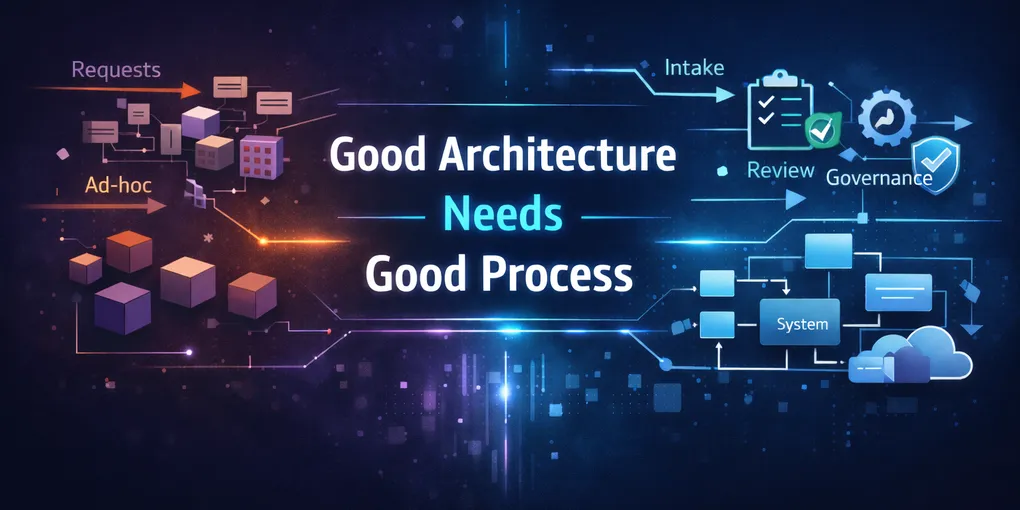
A poor — or missing — process can lead to poor design outcomes.
As architects, whether in software or cloud, we rely on processes to support how we do our work. When those processes are unclear or inconsistent, teams still deliver and projects still move forward. However, it becomes much harder to consistently produce the best possible design.
Most architecture teams will experience this at some point. As organisations grow and projects accelerate, processes sometimes evolve more slowly than the work being asked of teams.
What Processes Do Architecture Teams Need?
While every organisation works differently, there are several processes that tend to support strong architecture practices:
- Design Reviews – A structured way for designs to be reviewed by peers.
- Documentation – Clear expectations around what should be documented and when.
- Work Intake – A defined process for how work flows into the team.
- Go-Live Governance – Ensuring designs are validated before production deployment.
- Technical Design Authority (TDA) – A forum to review designs and maintain architectural standards.
- Retrospectives – Opportunities to reflect on work and improve how the team operates.
These processes are not about adding bureaucracy. Their purpose is to support collaboration, knowledge sharing, and consistent decision making.
What Happens When We Don’t Have These Processes?
Even without formal processes, experienced teams still deliver outcomes. Architects will collaborate informally, review work where possible, and move projects forward. However, without consistent processes the quality of design can gradually be affected. Some processes are helpful but not always critical. Others tend to have a much larger impact on how well a team functions. Two that often stand out are design reviews and work intake.
Design Reviews
Design reviews allow architects to benefit from the experience of their peers.
Architecture teams often include people with overlapping knowledge but different areas of specialism. Design reviews create space for that expertise to be shared. They allow assumptions to be challenged, alternative approaches to be explored, and lessons to be exchanged. Without that structured collaboration, architects can end up working more independently, which reduces opportunities for shared learning across the team.
Work Intake
Work intake is another process that can significantly influence how an architecture team operates. Without a defined intake process, work often arrives informally — through direct requests or urgent messages. Over time this can make teams more reactive, responding to whichever request appears most pressing at the time.
At an individual level this can make it harder to plan work effectively. At a team level it becomes more difficult to understand what everyone is working on, where support might be needed, and how workloads are balanced. Another side effect is that work entering informally can bypass other processes. Changes may move forward quickly without design reviews or governance simply because they appear small or urgent. Over time this can lead to inconsistency in how work is approached.
Conclusion
When processes are missing, the work still gets done.
The question is whether teams are able to do their best work.
Processes enable architects to share knowledge, review ideas, and learn from each other. They create the space for better design decisions and stronger collaboration. While processes can sometimes feel like friction, they exist to support teams rather than slow them down. Often, taking a step back to follow them leads to a better outcome.